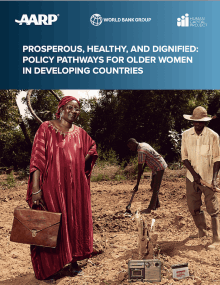
 In developing countries, women live longer than ever and make up the majority of older people. Many play central roles in their families and communities well into advanced ages, both as income earners and as unpaid carers of grandchildren, spouses, and even their own parents.
Older women’s wellbeing is being compromised, however, by economic insecurity, weak health, unmet care needs, and a high burden of care responsibilities. These challenges stem from past and present inequalities that are amplified by economic and social factors unique to developing countries. Government aging strategies need to adopt a gender lens. Context-appropriate policies can address the specific health, financial, and care challenges that women in developing countries face in later life while creating the foundations for today’s girls and women to age into healthier, more prosperous, and dignified older years.
This World Bank–AARP research outlines policy pathways to support older women in developing countries.